


 REQUEST A CATALOG
 REQUEST A QUOTE
Choosing the right clear plastic is one of the most frequent decisions in retail display, signage, and fixture projects. Acrylic (PMMA, often called plexiglass or acrylic glass) and polycarbonate are the two leading options. Both are lightweight, rigid, and transparent alternatives to glass, but they perform very differently once the part is in service.
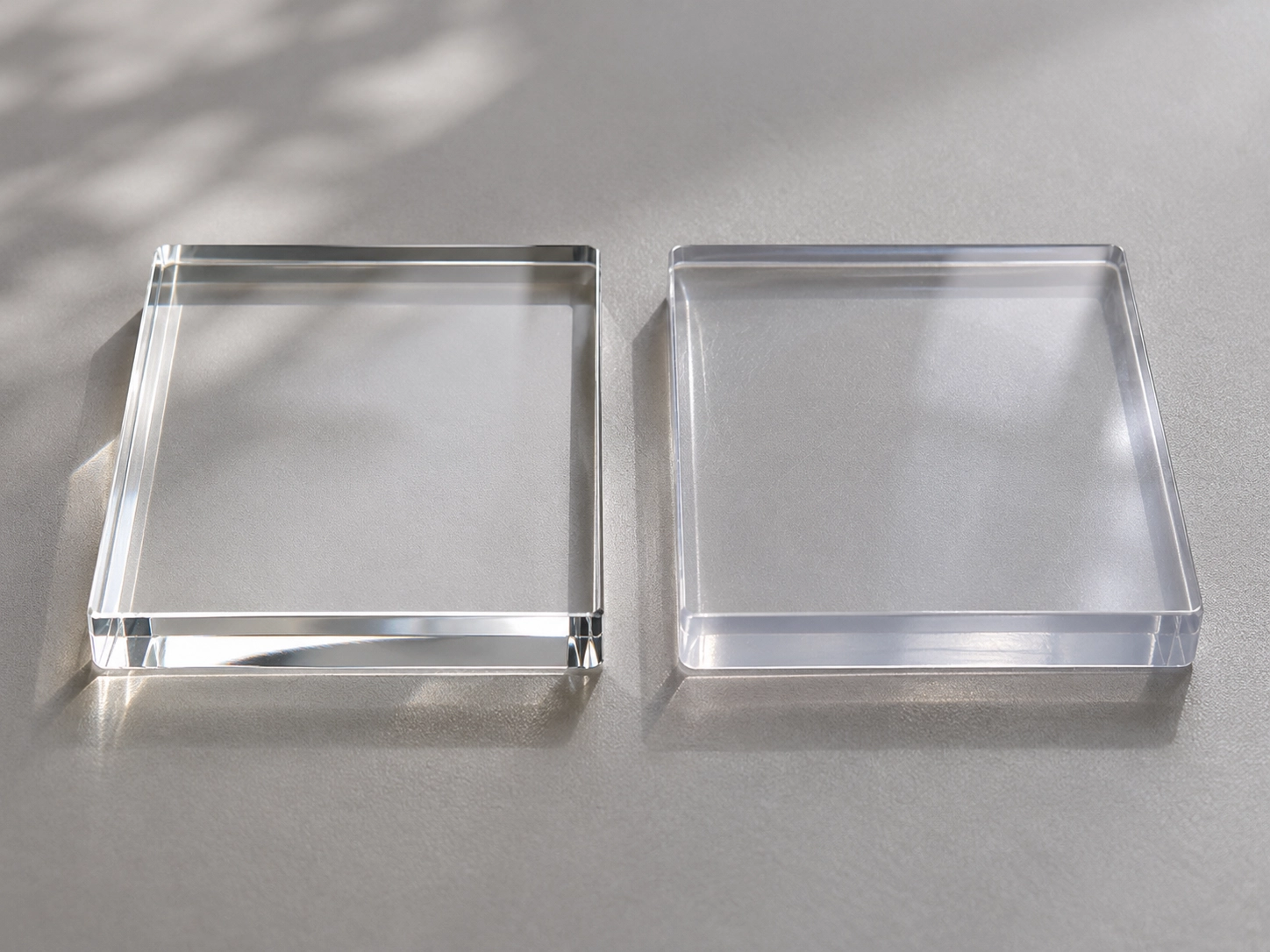
Acrylic typically wins on optical clarity, scratch resistance, and cost for appearance-focused indoor applications. Polycarbonate is the stronger choice when impact resistance is the priority. Matching the material to the real-world conditions of the project avoids costly replacements later.
| Property | Acrylic (PMMA) | Polycarbonate |
|---|---|---|
| Light transmission | ~92% | ~88% |
| Impact resistance | Moderate (can crack under force) | Excellent (often 20–30× acrylic) |
| Scratch resistance | Higher | Lower (frequently needs hard coating) |
| UV stability | Naturally good | Usually requires UV-stabilized grade |
| Laser-cut edge quality | Excellent (flame-polished) | Poor (tends to char or discolor) |
| Relative cost | Lower | Higher |
| Typical best uses | Displays, signage, fixtures | Guards, high-impact covers, safety |
When Acrylic Is the Better Choice
Acrylic is the preferred material for most retail displays, point-of-purchase fixtures, channel letter faces, lightboxes, and protective covers where visual quality matters most. It transmits more light, holds a glossier surface, and resists everyday scratching better than standard polycarbonate. It is also more cost-effective for the majority of indoor fixture work.

A major practical advantage is fabrication. Acrylic laser-cuts cleanly and produces a polished edge straight from the machine in most thicknesses. This often eliminates secondary edge finishing, which speeds production and improves appearance on visible parts. ACI regularly fabricates acrylic components for fixture and display manufacturers using laser cutting, CNC routing, and cut-to-size services.
When Polycarbonate Is the Better Choice
Select polycarbonate when the part is likely to be struck, kicked, or exposed to vandalism. It is the standard material for machine guards, safety glazing, and high-traffic covers where breakage is a real risk. Polycarbonate also offers higher continuous service temperatures than acrylic.
Because polycarbonate does not laser-cut as cleanly, most projects use CNC routing or other mechanical methods. Hard-coated grades are available when scratch resistance is also required.
Quick Decision Guide
- Prioritize clarity, surface hardness, and polished edges → Acrylic
- Prioritize impact resistance or abuse resistance → Polycarbonate
- Outdoor exposure with limited coating budget → Acrylic (naturally UV-stable)
- Higher heat or mechanical loading → Polycarbonate
Frequently Asked Questions (FAQ)
Is acrylic stronger than polycarbonate?
No. Polycarbonate has substantially higher impact strength and is the better choice where breakage is a concern.
Which material is clearer?
Acrylic generally offers higher light transmission and a clearer appearance.
Can you laser-cut polycarbonate?
It is generally not recommended. The material tends to char, discolor, and produce lower edge quality compared with acrylic.
Which is better for outdoor signs?
It depends on impact risk. Standard acrylic is more UV-stable without coating; polycarbonate needs a UV package for long-term clarity.
Need help specifying or fabricating acrylic or polycarbonate parts for your next display or fixture project? ACI Plastics supplies both materials and provides laser cutting, CNC routing, and full fabrication services with fast turnaround. Contact us for material recommendations and a quote.


