


 REQUEST A CATALOG
 REQUEST A QUOTE
Laser cutting and CNC routing are two of the most common methods for producing custom plastic parts without hard tooling. Both deliver accurate results and support low-to-medium volume work, but they excel in different situations. Choosing the right process improves edge quality, reduces secondary operations, and keeps costs in line with the project requirements.
Laser Cutting Strengths
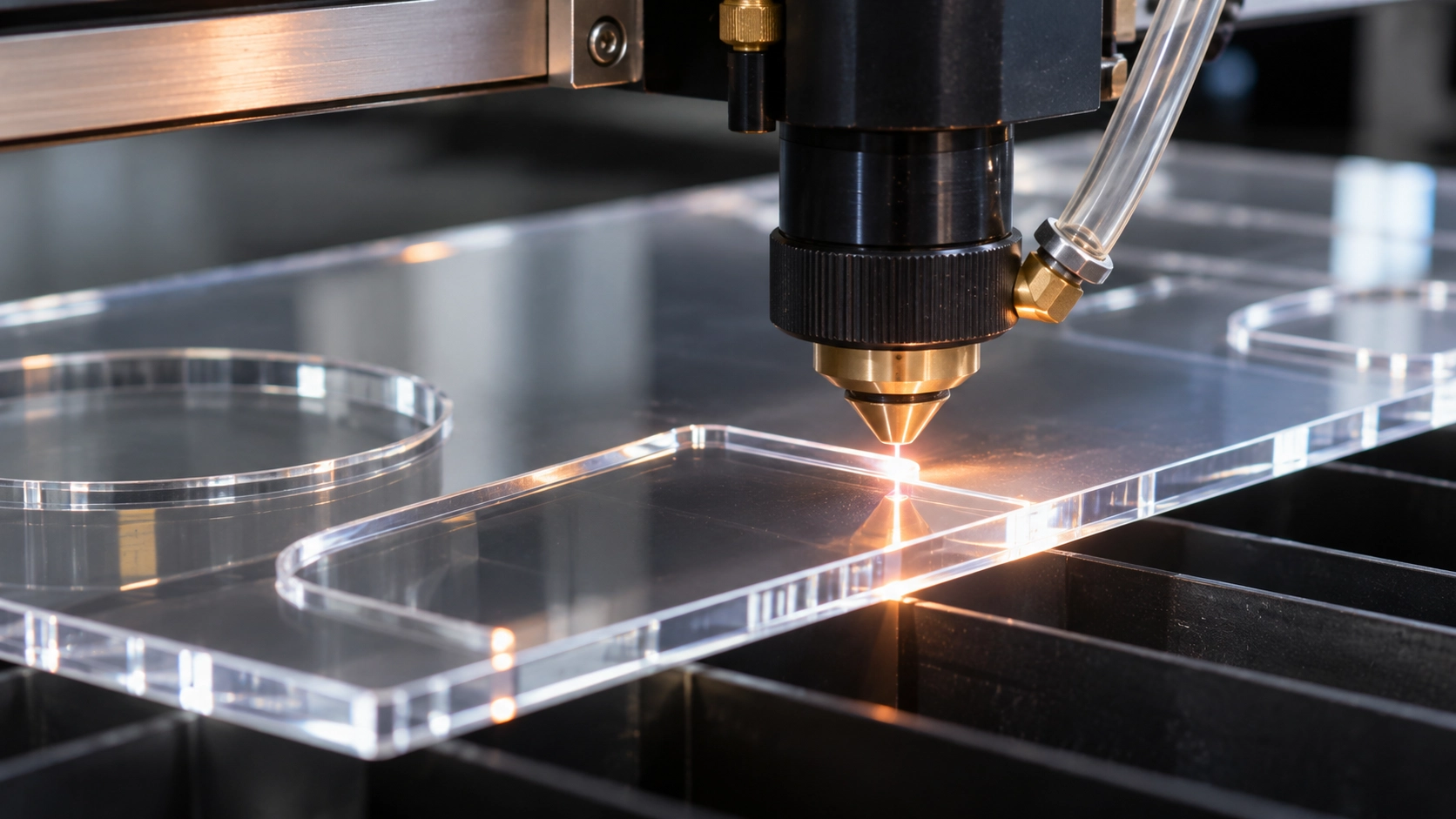
Laser cutting uses a focused CO₂ laser to vaporize material along a programmed path. It is particularly effective for acrylic. The laser produces a clean, flame-polished edge on clear acrylic in most thicknesses, often eliminating the need for secondary polishing. This is a major advantage for displays, signage, fixtures, and any part where edge appearance is visible.
Laser cutting also handles intricate details, fine lettering, and complex 2D shapes efficiently. It is typically the faster option for thinner sheets and high-detail flat parts.
CNC Routing Strengths
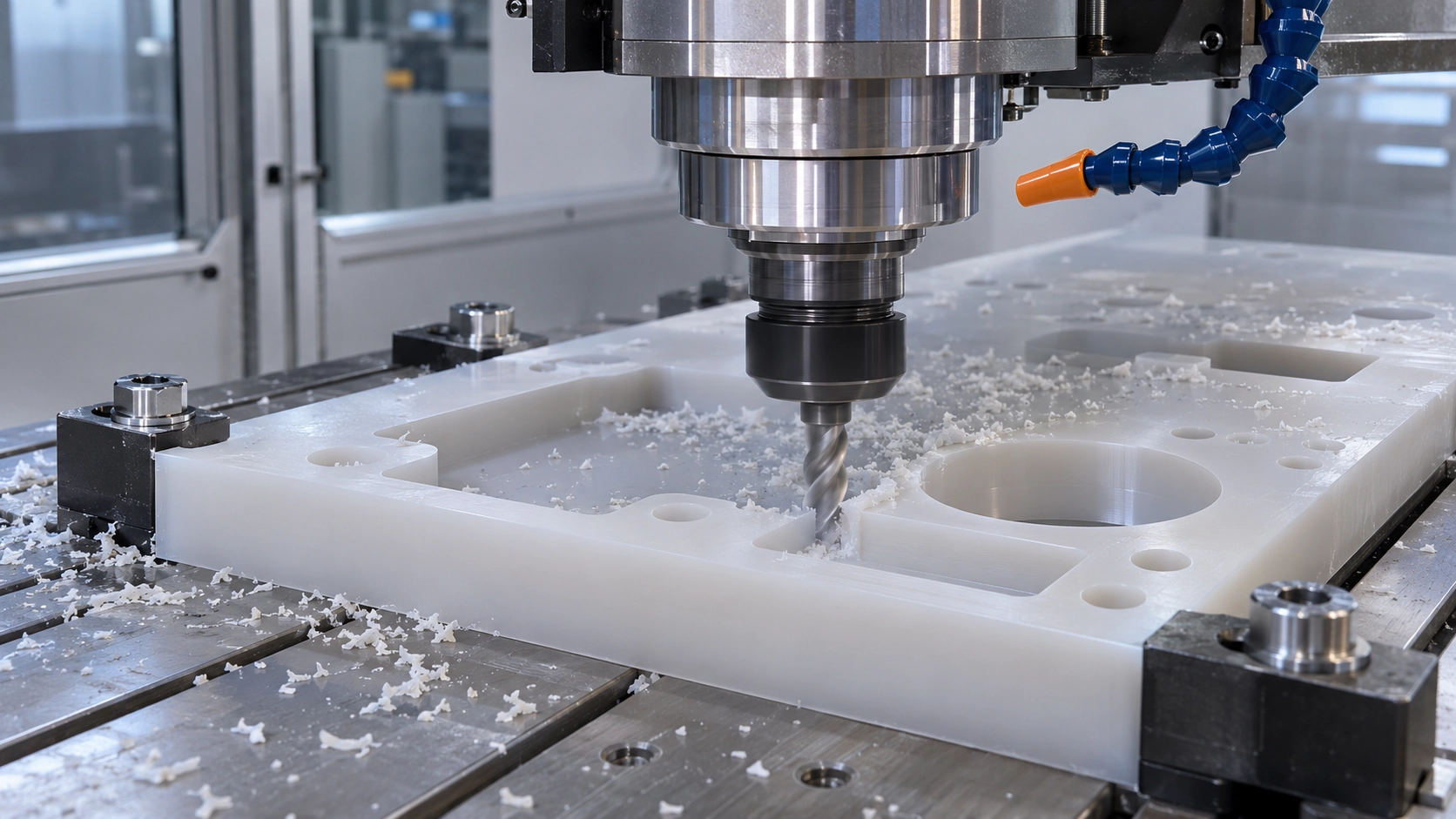
CNC routing uses a computer-controlled spinning bit to cut and shape plastic sheet. It works well across a much wider range of materials, including thicker stock, expanded PVC, UHMW, HDPE, polycarbonate, and most engineering plastics. Routing can also create pockets, slots, contoured edges, and limited 3D features that a laser cannot produce.
Edge quality from routing is clean but usually requires some finishing if a polished look is required. For structural parts, thicker panels, or materials that do not laser well, CNC routing is the more practical choice.
| Factor | Laser Cutting | CNC Routing |
|---|---|---|
| Best materials | Acrylic (excellent); limited others | Nearly all sheet plastics |
| Edge quality | Flame-polished on acrylic | Clean; finishing often needed for polish |
| Typical thickness | Strongest on thinner to medium sheets | Excellent on thicker stock |
| Detail capability | Very high (fine features and text) | High (pockets, contours, 3D elements) |
| Speed on flat parts | Often faster on thin acrylic | Efficient for thicker or multi-operation work |
Practical Recommendations
- Choose laser cutting for acrylic displays, signage components, intricate cutouts, and any project that benefits from polished edges with minimal finishing.
- Choose CNC routing for thicker materials, engineering plastics, pocketed parts, or when the material is not suitable for laser processing.
- Many projects combine both processes—laser for detailed acrylic elements and routing for structural or thicker components.
ACI Plastics offers both laser cutting and CNC routing in-house, along with design support and cut-to-size services. This allows us to recommend the process (or combination of processes) that best fits the part geometry, material, volume, and finish requirements.
Frequently Asked Questions (FAQ)
Can all plastics be laser cut?
No. Acrylic is ideal. PVC and certain other materials should be avoided because of fumes or poor cut quality.
Which process holds tighter tolerances?
Both can achieve tight tolerances on properly designed parts. Laser is often preferred for fine 2D detail; routing is better for features that require depth.
Do laser-cut acrylic edges need polishing?
In most cases, no. The laser produces a polished edge on clear acrylic.
Is one process always cheaper?
It depends on thickness, material, detail level, and finishing requirements. Matching the process to the part usually produces the lowest total cost.
Have drawings or a concept ready? Send them to us. We can recommend the best fabrication method and deliver prototypes or production parts with fast turnaround.


